A farm dashboard is only useful if it changes what you do next. The goal is not to admire every number before breakfast. The goal is to spot the one or two things that deserve attention while there is still time to act.
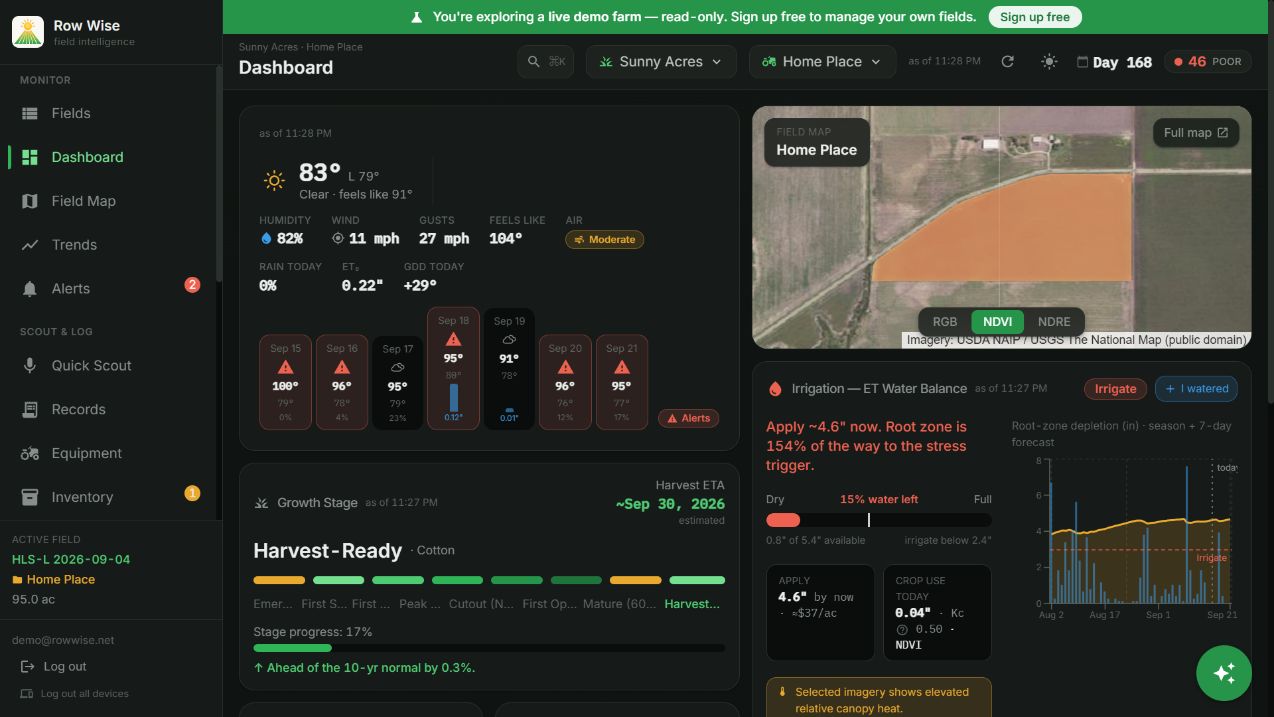
1. Check the field and the date
Before reading anything else, make sure you are looking at the right farm, field and imagery date. This sounds obvious, but it prevents a surprising number of bad decisions. Satellite readings may be several days old even when the weather is current.
2. Read the weather as a work constraint
Temperature and rain chances are useful, but wind, gusts, humidity and Delta-T often decide whether a planned pass can happen. Look for the next workable window rather than a single green or red badge. A good hour at 9 a.m. may be surrounded by poor conditions before and after it.
Forecasts are guidance, not a label. Recheck conditions at the field and follow the product label before spraying.
3. Put the crop stage in charge
The same weather means different things at emergence, bloom and harvest. Growth stage changes the urgency of water, heat, disease and harvest decisions. If the stage looks wrong, check the planting date and variety settings before trusting the downstream recommendations.
4. Treat the health score as a triage signal
A health score is a quick way to rank fields. It is not a diagnosis. Open the details and see which signals are pulling the score down. Water, heat and canopy vigor point you toward different field checks. Missing inputs should lower your confidence rather than quietly becoming a healthy score.
5. Leave with a short list
Turn the dashboard into a route:
- Handle anything with a narrow timing window.
- Scout the field with a new or worsening change.
- Check water needs before the day gets hotter.
- Move the rest to a task list instead of carrying it in your head.
If your dashboard creates a list of twelve urgent jobs every morning, it is not prioritizing. A useful morning view should help you decide where to go first, what can wait, and what evidence you need before spending money.